Dani's Niche

Family history. A novel idea.


Leave a comment

The Missing Letters of Civil War Soldier Frederick Pettit, Part One

Civil war letters

I hold a treasure in my hand, one of three pieces of history that have come to me, letters written by a young, literate Civil War solider. They peaked my interest because my great grandmother saw her three brothers march off to war. Two returned wounded, the third never made it home. I’ve wondered what they might have written to their sister and parents.

In a letter dated August 18, 1861, addressed to his sister, this particular soldier tells of his enlistment with the Union army and that he was on his way to report for duty. “Do not be troubled about my going,” he assures her. “I believe I go in the discharge of duty, I believe the rebels are not only fighting against our country but also against the truths of the Almighty. And I further believe that if we go forth to battle trusting in His strength we shall conquer.” Like the Confederates he would fight against, he was willing to lay down his life for the cause he believed in. The solider wrote he had seen the scared, sick, lame, and blind. He must have been aware of his mortality as he ends his letter with “until we meet above, Your affectionate brother.”

In the one dated May 2, 1864, he writes his sister of a personal matter, then gives a detailed description of his company’s march on April 23rd, its encampment on the Potomac and details of their movement through the end of the month.

The final letter, in its original envelope with a 3 cent stamp postmarked Washington D.C., was written to his parents on May 31, 1864. He writes of skirmishes and crossing the Pamunky River on a pontoon bridge near Richmond, VA and the sad news of the death of his 17 year old messmate, “an amiable and intelligent boy. He was shot through the breast just below the heart.”

Sad to say, this was one of his last letters home as he was killed by a sharpshooter a few weeks later.

I have touched history. It has touched me and I cannot help but ask: Did he sit upon a carpet of grass under a tree as he wrote this letter home? Did he hear sounds of war in the distance, the moaning of the sick and dying nearby? Did the smell of sweat and blood overpower the fragrance of spring blooms? I only know what he has written and it is enough. For now.

My research is turning up some very interesting information on this soldier. I hope to post further quotes from the three letters, a photo, and more in a future blog.


Leave a comment

To Yosemite by Wagon, 1898

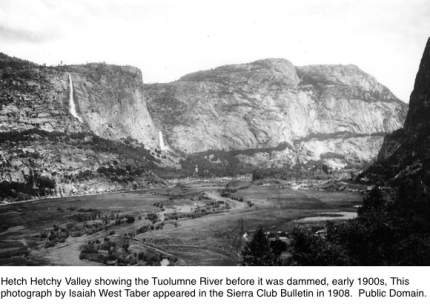
Hetch Hetchy Valley, early 1900s

It was not just the weather that was cold and gloomy that day in January 1898. Dan had done everything he could to keep his beloved wife Lizzie alive. In the end she was so weak and miserable from the tuberculosis, I knew that when she slipped away it was for the best.

Lizzie was my big sister, eleven years older than I. When she fell ill and I sought to cheer her, it was she who had words of encouragement, but those were not the words that came to mind as we stood at her grave. Instead it was those she had whispered several weeks before. “Take care of my girls, won’t you Lucy?” I took her hand and promised, “You know I will.”

The last year of her illness I had already been caring for the girls, ages four and two, as Dan took the five of us to various locations in search of a healthier climate. Finally he brought Lizzie home to spend her last days in a familiar setting. The first months after her death, I was glad to have Verna and Alta to keep me busy. Dan seemed to deal with his loss by tending to his horses and mules, his grain and farm implements.

One month later we suffered another blow when Dan’s mother passed away. In spite of the deaths of the two women closest to him and the severe drought that had taxed his emotional and physical resources as a farmer, by mid-June Dan announced we would be taking a month’s vacation. He said it would do us good. I did not question him.

Planning and preparing kept us occupied for many days as we would be carrying several hundred pounds of food plus all the supplies for the four weeks. When the wagon was packed and the horses readied, Verna and Alta took their places and I climbed up to join them. When Dan snapped the reins and we pulled away from the ranch,  I wondered what he was feeling. Instead of Lizzie, his sister Grace sat next to him waving at the ranch hands who would keep the farm going.

A few hours after leaving Paso Robles we met up with Dan’s brother Will and his wife Maggie in their smaller wagon. After a brief rest, they headed out ahead of us, keeping enough distance between so we didn’t eat their dust. All of us wore wide brimmed hats which protected us from the sun. Dipping our heads kept the blowing sand and dust from our eyes.

We were finally on our way to Yosemite Valley where we would view the magnificent sights we’d only read about and seen photos of with our stereoscope. The twenty or so miles we traveled each day seemed to pass quickly as everything around us was so different from home. As we bounced along over rough road I could not help my eyes fixating on the broad shoulders of the big man in front of me. One would never guess he was nearly forty with his full head of dark hair though now speckled with dust. Lizzie had found a good man. And he had found a good woman.  It was sad their marriage had been cut short.

Though I loved the girls, on the wagon I could not escape their constant chatter and questions. Grace must have noticed for when we stopped to water the horses and stretch our legs, she suggested we change places. Grace climbed in back with the girls where she kept them occupied searching and counting all the animals they saw along the way.

Dan and I sat side by side, the squeals of the girls and the din of jingles, rumbles and snorts a background to our silent thoughts.

The wagon swayed over a rough stretch and my shoulders pushed against his. I grabbed the rail and straightened. Our eyes met when he looked at me with the slightest turning of his head and smiled. I turned away quickly as if to view the distant mountains we would soon cross.

That night as I huddled in the warmth of the campfire, staring at the dancing flames, I realized that though our destination was the beautiful Yosemite Valley, I must not miss the wonders of the journey to reach it.

Grace sat on the log beside me, pencil in hand. “38 rabbits,” she said as she wrote the words before closing her diary. “Tomorrow is another day and there are only a few hours till we’re on the road again.”

We went to the tent where the girls were already asleep. I curled up in my blanket but lay awake thinking about the next day. I decided that when it was my turn to sit up front in the wagon with Big Dan, I would have one of the girls sit between us. Surely there would be room for three.

~ to be continued

If you like this story about my grandmother Lucy, I’ll write more tidbits from the real diary Grace wrote of their adventure.


Leave a comment

Out to Pasture

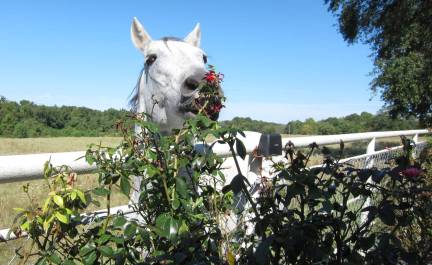
horse eating roses for blog

“They’ve been put out to pasture.” Our neighbor was speaking of the three old mares that graze in the field behind our house. He was implying they had “seen better days.”

My husband is retiring this month and we’ll be making a lot of changes, including a move to the place (in a distant state) where these horses come to nibble on the roses along our back fence. As I think of that scene, I pray that, like them, we’ll not be put out to pasture. I like to think the best is yet to come.

The years ahead are supposed to be our “golden years.” As pure gold is not strong, neither do we have the strength of youth. But, like gold, we can be useful and valued and should be shining examples to the younger folks. After all, we’ve racked up lots of years of experience. Right?

“Golden years” may imply a life of leisure after retirement, but studies show this usually lasts about a year. Because retirees like us have freedom to spend the days as they choose, it is important to have a reason, beyond self, for getting out of bed each morning. Focusing on “me” never inspires.

Reminders to myself:

Accept change. There will be many and I may not like some of them at first, but “new” or “different” is okay and besides, I need to save my strength for the bigger battles.

Expect a slower pace. My mind and body may not work as quickly as they used to, but they still function, so be kind to them. No name calling.

Learn or do something new. Putting thoughts on paper for my blog or developing characters and storylines for my books don’t come easy but the challenge makes me determined. So does Sudoku. It’s hard to get a good grasp of technology though. Take deep breaths and keep trying.

Humor goes a long way. Remember that Dad lived 99 years. He brought joy to others and laughed a lot, especially at himself.

Relearn a previous skill. I sit at the piano and realize, with practice, it is possible to relearn all those recital songs I played when I was ten or twelve years old.

Serve others by volunteering in the community. How exciting is this! Helping others is always good for the soul.

Continue a healthy lifestyle with physical activity (walking, bicycling, camping), fresh air, and nutritious food. I like this one!

Socialize by playing games or going on tours. Friends and family can stimulate my mind in discussions of ideas, current events, books.

Spend time with the young. Children like hugs and being read to. Laugh with them, have fun. With teens and young adults, find common ground. Show interest in their activities and gadgets even if I don’t understand their lingo or technology. Share a wise saying often enough so they will remember me for something after I’m gone.

Leave an inspiring legacy. This could be photos, letters, family history, notes in my Bible, stories I write or tell, whatever I want my descendants to know about me and my reason for living.

Embrace life as an adventure. There are no re-runs.

Remember that God loves me. “For the Lord is good; his mercy is everlasting; and his truth endureth to all generations. Psalm 100:5


copyright by d gustafson January 2018


2 Comments

25 Christmas Cards


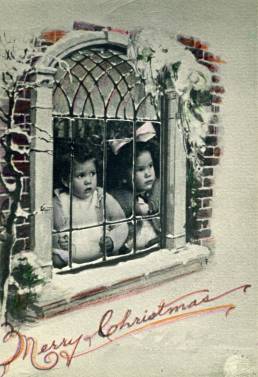
Christmas card 1949_use

Dad turned off the light that dangled from a beam in his small darkroom under the house. When he switched on the red light it became a magical place, at least in my little girl’s thinking. It smelled of the chemicals that filled several trays on the table. A string of photographs dried overhead. Dad worked with a machine called an enlarger. He lifted wet sheets of paper in and out of the trays. I peered wide-eyed as images slowly materialized on the paper.

For twenty-five Christmases he decided on a design, took the black and white photos with his 35mm camera and developed the negatives, then cut and pasted, printed and hand tinted our family Christmas cards, all before computers and digital cameras and Photoshop.

Dad must have been dreaming when the second year he pictured us sisters peering through a window framed with snow laden flora. As far as I know California’s central coast has never had a white Christmas.

Our cat Sam made his debut one Christmas and the year he died Dad pictured him with wings flying away from us. Over the years the photos changed as siblings were born or left home to raise their own families. The last cards pictured Mother and Dad alone, one showing them pretending to talk on an old crank telephone, keeping in touch with the kids and grandkids and friends, no matter the distance.

I keep an album of the cards. They are a reminder of Dad’s labor of love and that family is a gift to cherish.


2 Comments

The Blacksmith’s Heart

A Friend in Need

The picture hung on the wall in my parents’ living room. Now it hangs in mine in a less gaudy, more fitting frame. The print is dated 1902 and has no other markings but I believe it is from an old painting titled “A Friend in Need”.

I don’t know where my mother acquired it but I can guess why she loved the picture. Her father and grandfather were blacksmiths and her interest in dolls began at a young age when she hand stitched clothes for her small porcelain doll. Years later Mother accumulated an extensive doll collection.

The picture features a white-haired village blacksmith and a little girl with her doll and broken doll carriage. A road leads to a village where the girl’s story begins. The blacksmith’s tools and the large broken wheel tell of his work but the small wheel on the anvil reveals his heart. In the shop the fire burns and the old man has work waiting yet he puts it aside.

The little girl seeks out the one she trusts to help her.

I am poor and needy; Yet the Lord thinks upon me. (Psalm 40:17a)

Now this is the confidence that we have in Him, that if we ask anything according to His will, He hears us. (I John 5:14)

The old man is an example of how we should bear others’ burdens.

Let each of you look out not only for his own interests, but also for the interests of others. (Philippians 2:4)

We then who are strong ought to bear with the scruples of the weak, and not to please ourselves. (Romans 15:1)

It is a sweet scene with a happy ending. On the other hand, what if the girl had no one to go to? What if there was no one to mend the wheels, big or small? What if there was no one who cared?  That is the harsh reality for many today. They do not know there is One who cares. The blacksmith in this picture may also represent the Lord God. Numerous Bible verses remind us of His love and care, His mercy and grace.

Just as a father has compassion on his children, So the LORD has compassion on those who fear Him. For He Himself knows our frame; He is mindful that we are but dust. (Psalm 103:13,14)

The Lord is near to those who have a broken heart, And saves such as have a contrite spirit. (Psalm 34:18)

Casting all your care upon him; for he careth for you. I Peter 5:7)

How much does God care for you?

For God so loved the world, that he gave his only begotten Son, that whosoever believeth in him should not perish, but have everlasting life. (John 3:16)

*******

Do you recognize this painting? Do you know anything about it, especially the artist’s name?

What story would you write?

Does the picture encourage or inspire you?

Counting my blessings,

dani


3 Comments

Blessed!

Danyce pumpkin patch

My husband and I just returned from a research trip to beautiful Wisconsin where friendly residents helped us find answers to many family history questions. We spent tedious hours looking through documents from the mid-1800s at the Driftless Historium in Mt. Horeb and scrolling through microfilm in the archives at the Wisconsin Historical Society in Madison. It was a pleasure to meet new-found relatives including my third cousin who was born in the Stone House on Thanksgiving day 98 years ago (and the doctor stayed for dinner). We also enjoyed reminiscing about Kenya with missionary friends.

It would be wonderful if next harvest, instead of a pumpkin like this one in a Texas field, I’ll have in my hands book three of the Stone’s Hope Series.

Harvest time causes me to reflect on God’s provision in every aspect of my life. I am blessed!

Then shall the earth yield her increase; and God, even our own God, shall bless us. Psalm 67:6


Leave a comment

When the Circus Came to Town

Clyde Beatty Circus conveyance copy

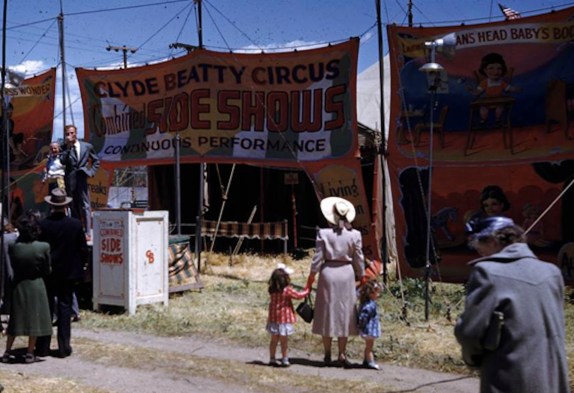
Clyde Beatty left his family’s farm as a teenager to join the circus where he became a famous lion tamer. Later he formed his own circus which traveled by rail with as many as forty animals and the finest circus performers. Between 1947 and 1956 the Clyde Beatty Circus drew large crowds when it rolled into our small agricultural town in California.

When I was four years old my dad told us the circus that summer would be set up on the playing field of the school where he taught, just one block from our house. It was not the tight rope walkers or aerialists, not the clowns, animal acts or sideshows I remember. It was watching the workers set up the huge tent with the help of the elephants.

circus tent and masts_canvas on ground copy


circus tent going up copy

The crew unrolled and stretched out a huge canvas on the ground, then staked it securely with heavy rope. Four tall center masts topped with American flags were hoisted. Then the elephants were led to their places, harnessed with heavy chain attached to the tent. We watched wide-eyed, except Dad who had his movie camera rolling. As the big animals moved slowly forward, each in a different direction, the huge big top rose high off the ground. It still amazes me when I view the old movies of the amazing circus elephants.

elephant pulling up circus tent copy

One year, during a performance when the tent was packed with a cheering crowd, the wind lifted part of the canvas. A large center pole went up with it. The base swung up and crashed into the bleachers about eight feet from spectators. Parents whisked their children out and refused to take them back no matter how much they begged. One terrified child jumped down the back of the bleachers from about six rows up and dove under the tent, right into a pen with a pack of show dogs. That sent her just as quickly back under the flap where her dad grabbed and scolded her. The show went on, but for many the fun was ruined that year.

Sideshow 1950 with Danyce and Dollie and mother copy

Our town has grown and there are fewer lots on which to locate the smaller circuses which come and go every year. There are no more lion and tiger acts or working elephants but one thing has never changed. Excitement is always in the air when the colorful posters go up announcing that the circus is coming to town.


copyright d. gustafson August 2017


1 Comment

Great Grandmother’s Sewing Basket: A Writer’s View

Great Grandmother’s sewing basket was the “something old” I was given on my wedding day. It is a Victorian sewing basket with silk tassels, old Chinese coins, colorful beads, and Peking glass rings.

sewing basket2

On my wedding day long
ago
I received Great Grandmother’s basket
so I could sew.

With the notions inside I made quilts and
dresses.
There were also ones for mending
messes.

Sometimes a pattern and sometimes
not
I pinned and cut and measured
the lot.

After stitching and joining with needle and
thread
Sometimes I ripped, something I
dread.

I wanted it right, each piece to
fit
So I took my time with every
bit.

The thimble helped to push the
thread
And protect the finger so it is
said.

Yet tears did flow and time seemed
slow but
It wasn’t long till I was attaching a
bow.

Buttons and snaps and all kinds of fluff
finished it off and I said,
“Enough!”

I don’t sew much as I did in the
past
But the tools are there for mending
fast.

I sat down to work on
my novel
today
And saw my basket in
a different
way.

For making a dress it holds all the
notions
Like the tools for writing, it’s not just the
motions.

With paper and pen I start with a
plot
And a hero who gets in trouble
a lot.

I fit the pieces, the story comes
slow.
After cutting and stitching, it starts to
flow.

All the work, determination and even
tears
Are finally ended, along with my
fears.

When my novel is finished
I’ll start
another
And say to my self,”It’s not such a
bother!”

Sewing and writing are much the
same
Both can be fun though they’ll bring no
fame.

If you have the tools and also
passion
Sewing and writing can be great
blessin’s.

What notions do you think Great Grandmother kept inside her sewing basket?


copyright d gustafson July 2017


2 Comments

A Great American

Use for Blog

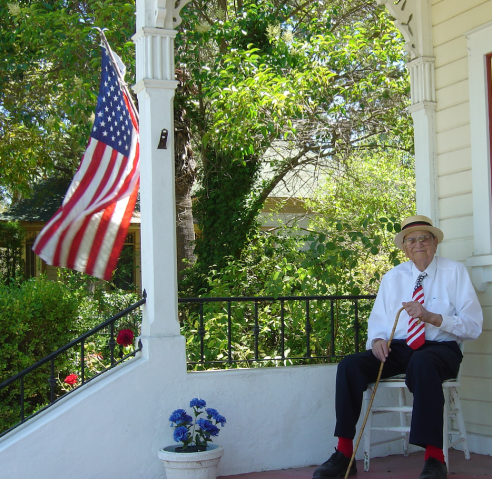
My dad was a great American (though not a famous one), a loyal son, husband, father, and patriot. When the U.S. entered World War II in 1941, he was a 36 year old newlywed. He did not hesitate to enlist in the U.S. army where he rose to the rank of captain.

Until his death at 99, Dad proudly flew the American flag from his front porch every day, not just on holidays. He proudly wore the red, white and blue and sometimes a tie that played the tune “God Bless America.” He respected the flag and honored what it stood for.

On this 4th of July as we celebrate our freedoms, let us remember the words of an unknown author:  It is easy to take liberty for granted, when you have never had it taken from you.

In God we trust!


9 Comments

Summertime travel in our Kenskill

Screen Shot 1957 trailer

In the 1950s and 1960s summer was when we packed the trailer and headed east or north from California. Because Dad was a seventh grade teacher, we were able to spend six to eight weeks on the road which became his summer classroom. Dad made learning fun for us four kids as we stopped at all the landmarks, visited friends and relatives, and camped along the road or in state and national parks.

One of Dad’s hobbies was photography. We got tired of posing but those Kodachrome and Ektachrome slides help us remember the hot summer days when we crisscrossed the United States in our matching red and white station wagon and travel trailer.

One scary incident was when the trailer tire blew and made a big hole in the closet. Shoes and clothes littered the highway until Dad could pull over.

The whole family loved our 21 foot Kenskill because it had a toilet and tiny shower and room for all six of us. It afforded “luxuries” we didn’t have with tent camping or with our previous 16 foot trailer. Kenskills, manufactured from 1946 to the mid 70’s, are now sought after vintage trailers. Over the years my husband and I have enjoyed tent camping but as we age and need a bit more comfort for sleeping and convenient kitchen area, we’re seeking an affordable teardrop type trailer. Hint, hint.

Dad picked a beautiful place to pull over for the photo op showing three of us kids with mom. Our five year old brother is wearing the leather lederhosen and Bavarian hat with feather brought from Germany by our older brother when he cycled Europe.

Happy and safe travels to all who are on the road this summer enjoying the sights of our beautiful country.


Leave a comment

See what you missed

walking stick Phasmatidae jpgI must have walked past the dry leafless branch many times.

A friend happened by and spotted something I’d missed. When he reached with his hand, the “twig” climbed onto it. No longer camouflaged, the “twig” was easily recognizable as a walking stick.

Sometimes it takes other people to show me things about myself and the world around me that I cannot discern on my own.

I remember sitting in the midst of hundreds of African high school students not thinking myself different because I saw their faces, not my own. From their perspective it was easy to pick out the only white face in the crowd. I didn’t blend in at all.

Africa was home for over twenty years, but after one particular stretch of five years I returned to spend time with my family and supporting churches. Probably no one noticed nor could sympathize, but I struggled to feel like I fit in with the culture I’d grown up in.

When I consider this interesting insect many lessons come to mind.

discernment

perspective

vulnerability

blending in

??? (add your own)

Sometimes I get carried away thinking about God’s creation, learning (not always applying) lessons from what He has revealed in the world around me.

But ask now the beasts, and they shall teach thee; and the fowls of the air, and they shall tell thee: Or speak to the earth, and it shall teach thee: and the fishes of the sea shall declare unto thee. Who knoweth not in all these that the hand of the Lord hath wrought this? In whose hand is the soul of every living thing, and the breath of all mankind. Job 12:7-10

Fun facts about the Walking Stick (Phasmatodea):
Their size can be less than and inch to over 1 foot in length.
They can regenerate lost limbs.
They are harmless to humans.

(photo taken in eastern Kenya, years ago)


7 Comments

Bicycling adventurers in the 1800s

variety of cyclesRolling hills with challenging climbs, wildflowers, and moderate climate draw bicyclists from near and far to California’s beautiful Central Coast. Major events include The Great Western Bike Rally, the Central Coast Double Century and Eroica California as well as charity rides and the Tour of California which pass through from San Francisco to Los Angeles.

My husband and I are no strangers to the sport. As I write he is climbing the hills not far from our front door. He rides to work and participates in century and double century events. For years I joined him on weekends and for century rides along the coast and alongside landscapes carpeted with wildflowers. We’ve bike camped and participated in week long supported riding in Idaho and Montana.

I was surprised to learn that cycling has been a popular sport in our area since the late 1800s when bicycles were a fairly new mode of transportation. Several times in 1897 and 1898 a young man named Fred Smith rode his bike from Palo Alto to his home in Paso Robles, about 200 miles, in one day. This is a challenge for anyone, even today with our lightweight bikes with 25 speeds, pneumatic tires on paved roads, as opposed to one speed on solid rubber tires over rough dirt roads.

On November 6, 1897, Eddie Kragness, who was riding a bicycle for the Olympic Club of San Francisco, covered the distance between San Francisco and Los Angeles in a little over two days. Fred Smith joined him at Chualar and rode as guide as far as Paso Robles. They rode the railroad ties for several miles because they found that it was easier than riding on the sandy road. At the lunch stop in King City they ordered one dozen soft boiled eggs for their meal. Fred’s brother, Paul, joined them in Paso after dark and they rode together as far as San Luis Obispo. Kragness finished the ride the next day. His record was not broken until sixty years later with the aid of paved roads and improved gearing.Paul Smith on bike with Clark S. Smith

Fred’s brother, Clark, who owned a bike and gun store in town, took four days to ride his 51-inch big wheel from Oakland to Paso Robles. Not the most comfortable mount for such a long journey. Clark’s most memorable competition took place on the 4th of July 1895 when he raced through town against strong competition, having trained by going without ice cream and pedaling to his dad’s ranch each day. The young man took a late lead to win the three mile race and claim the six-dollar prize.

Leave it to the young men to prove their strength by pedaling up hills, endurance by distance riding and speed by racing. For that, times have not changed, but we notice there are many more gray-haired riders enjoying the sport nowadays. Here’s to the health and happiness of all who enjoy pedaling in our great outdoors.

The top photo shows the B.H. Franklin store in Cambria, California, first used as their high school in 1890. Note the various types of bikes and riders. Bicycling was not only a practical means of getting from place to place before automobiles but soon became a popular sport. 
 
Paul Smith is shown on bike with his brother Clark S. Smith

Photos courtesy of Gary Smith


Leave a comment

Heart of Roses

heart-of-roses

A  heart of pink roses stood beside the grave of my mother-in-law. On that cool, windy February day we paid our last respects before the coffin was lowered.

Jim and I had already said our good-byes to Mom weeks earlier, but the graveside brought closure to her earthly life. Her legacy might be summarized as Joy in Jesus. Over the years many, including myself, were influenced by her godly example.

Now also when I am old and grayheaded, O God, forsake me not; until I have showed thy strength unto this generation, and thy power to every one that is to come. (Psalm 71:18)

One generation shall praise thy works to another, and shall declare thy mighty acts. (Psalm 145:4)

Not everyone lives to be old and gray-headed, but every one of us will leave this world one day. The older I get, the more days I have to account for how I have used my time, talents, and possessions.

What will I leave behind? Stuff for loved ones to sort through? I hope they don’t keep “things” just because they were special to me. Certainly photographs and written family histories are important to pass down to future generations.

In light of eternity, my greatest desire is for the ones left here to know Jesus as their Savior and Lord. I am a sinner saved by grace. The Lord is the strength of my life. He is faithful and true. His word never fails. Trust and not be afraid. These and many other truths are embedded even in the fiction stories I write because I want others to know that God’s word is the Word of Life. The grass withers, the flower fades (the beautiful heart of roses has already withered), but the Word of our God stands forever. (Isaiah 40:8)

Jim was reciting Mom’s favorite verse as she passed away. I like to think they would be her last words to us. Behold, God is my salvation; I will trust, and not be afraid: for the LORD JEHOVAH is my strength and my song; he also is become my salvation. (Isaiah 12:2)

If pink roses symbolize gratitude, then to me the heart of pink roses represents gratitude for a blessed life on earth and the promise of eternal life with our Lord.


3 Comments

Winter Music

screen-shot-2016-12-09-at-2-56-16-pmIn the 1880’s, Amos and Mary and their ten children (one of whom was my grandmother) celebrated Christmas in Wisconsin without a lot of fuss. On Christmas Eve while the wind blew cold and the snow deepened outside, the younger children would hang their stockings up against the wall behind the kitchen stove. After they went to bed the older ones popped popcorn to put in each stocking along with a red apple. The two oldest, Charley and Lizzie, always tried to have a small gift for their siblings. Mary usually had a pair of cuffs she had knitted for each of her children. They were so happy for those warm cuffs on days when the temperature dropped well below freezing. Simple gifts given in love.

On Christmas morning the children gathered around Amos as he read the Bible account of the birth of the Savior. Weather permitting, they would pile into the wagon and bundle themselves with warm blankets. At the church they sang the carols and listened to a message about God sending His only begotten son to redeem sinful man.

Winter was a bleak time of year. On days when the twelve were housebound they warmed themselves in front of the kitchen stove or the wood heater in the living room. They read, sewed, discussed the past year and shared their hopes for the year ahead. Being cooped up brought moments of conflict, but these did not last long, especially when Mary began to sing her favorite hymn, “When We’ve Been There A Thousand Years.” Charley and George would bring out their violins and each child given opportunity to choose a hymn for all to sing. One year Amos surprised everyone with a pump organ which they gathered around and sang like a choir in full harmony,

No other season was like winter for it was on those coldest and harshest days of the year, when a storm raged outside, that the family enjoyed the sweetest fellowship, safe and cozy inside their little log house. It was the time of winter music.

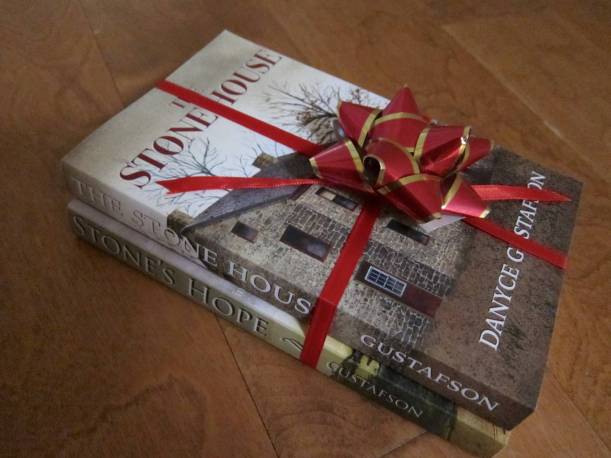
As if the family had not suffered enough hardship, Amos faces the greatest challenge to his faith as told in Book Three of the Stone’s Hope Series, “Winter Music.” Looking to publish in 2018 (or sooner). The first two volumes,“Stone’s Hope” and “The Stone House” are available in paperback and e-book at amazon.com.


Leave a comment

Blessed

thanksgiving-1950-copy

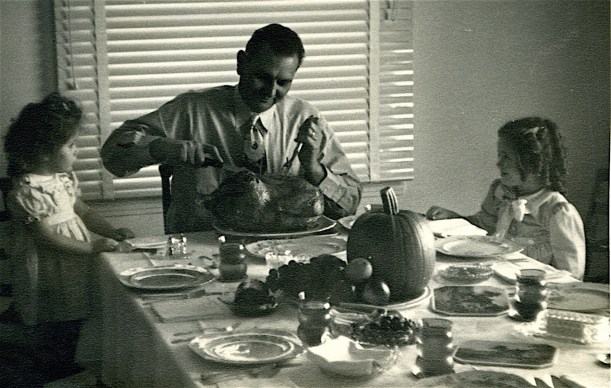
The country remained divided in the Fall of 1863. During this troubled time in our history, in a speech written by Secretary of State William H. Seward, President Lincoln proclaimed one day to be set aside each year that the  “gracious gifts of the Most High God … be … gratefully acknowledged as with one heart and one voice…” He spoke of God’s mercy and blessings and called on the American people to repent and pray that God would heal the wounds of the nation and restore peace and harmony.
Thanksgiving is an attitude of the heart in appreciation, a recognizing of the giver. Even when I don’t feel thankful, I am always on the receiving end of the Lord’s bountiful blessings. His love and mercy and grace never cease. Praise God from whom all blessings flow!

Happy Thanksgiving!


Photo: Thanksgiving 1950


2 Comments

Just a Moment

falls-at-koa-copyWe pitched our little tent in a grassy meadow (shared with more than a few rabbits). The sound of rushing water drew us a short distance to a waterfall which cascaded like white threads over a rocky cliff. It splashed into a creek to continue its journey rippling over and around rocks and fallen branches.

Every one of my senses came alive as I took in my surroundings. The scene was picture-perfect, the setting a place of rest and contemplation. I found my camera and took several photos.

How often I try to capture moments of beauty and awe, special places, people, and times. But photos are only fading reminders of these. They cannot bring back the actual moments.

My life on earth is made up of moments. Trying to keep hold of a moment is like trying to catch hold of my breath. It might even be my last breath.

The Bible likens a moment to the “twinkling of an eye.” We are urged in 2 Corinthians 6:2 …now is the day of salvation. Now may be all the time you have (if you haven’t already) to accept God’s gift of life through Jesus Christ.

One more thought: Jesus is with me in each of the moments that make up my life, caring and providing for me. Sitting by a quiet stream may give a sense of peace, for a time, but in the midst of trials and uncertainty (which seem to be increasing by the day), my only true peace is of God. I stand on these promises:

Thou wilt keep him in perfect peace, whose mind is stayed on thee: because he trusteth in thee. (Isaiah 26:3)

And the peace of God, which passeth all understanding, shall keep your hearts and minds through Christ Jesus. (Philippians 4:7)

Peace I leave with you, my peace I give unto you; not as the world giveth, give I unto you. Let not your heart be troubled, neither let it be afraid. (John 14:27)


2 Comments

A fire and a hymn

Coyote Fire 1964jpg

It was a sunny September day. Two weeks before, my parents had left me at a beautiful college in the forested hills of Santa Barbara.  Freshman orientation was underway. Our initiation turned out to be more frightening than any upperclassman could have planned.

When I first saw the smoke it was miles away. Later, standing with other students, I saw that the fire was quickly spreading across the hills. It was no respecter of  persons as it ravished mansions which housed expensive art collections as well as rustic hideaways. The flames moved closer to the school as we waited anxiously for the order to evacuate.

Cars started pulling up to our old timbered dorm. A student opened the trunk of his car. The thought of losing even my few belongings horrified me. I grabbed an armful of clothes on hangars and stuffed them into the car. The student drove my roommates and me to a fancy hotel that offered to house us. We stood in an elevator with a finely dressed woman who owned an estate with a mansion surrounded by manicured gardens. The fire left her with no home. She took refuge in the hotel with her overnight case in hand.

At night we watched from the balcony in horror at the sunset colors on a destructive path across the hills. Would there be a college to return to?

We did return. A small men’s dorm was lost and there was damage to the beautiful grounds but the school survived. There were stories of bravery among the men students who fought off the flames to save their school. One spark landed beside my dorm and lit a tree but someone was there to extinguish it.

The first day back on campus the whole student body came together to praise God. We sang “Great Is Thy Faithfulness,” a familiar hymn but now with new meaning. I have never heard it sung, before or since, with such emotion.

Great is Thy faithfulness! Great is Thy faithfulness!
Morning by morning new mercies I see;
All I have needed Thy hand hath provided —
Great is Thy faithfulness, Lord unto me!

I learned to not set my heart on material things. Even if those are lost, God is still faithful. His love never ends. He gives me peace and His presence is ever with me to cheer and guide. He gives strength for today, hope for tomorrow. His mercies are new every morning. God does not give me what I deserve. He gives what I don’t deserve. In spite of my sinfulness and shortcomings, He shows compassion. Every day He blesses me in new ways.

Shortly after the Coyote fire, a speaker at morning chapel challenged us to think about what we wanted to do with our lives once we graduated. For me that was still a long four years away, but I signed a card that said I was willing to go and do whatever the Lord wanted me to.

Just before graduation, I received that same card in the mail reminding me of my commitment. I was graduating with a degree in elementary education and I had committed to serving the Lord as a missionary to Africa.

A few months later I boarded a TWA jet that took me to Africa where I served the Lord for 20 years, having to trust Him for all my needs.

Singing the words of that wonderful hymn always fills me with praise and wonder at His leading in my life. Great is His faithfulness!

Great is Thy faithfulness, O God my Father;
There is no shadow of turning with Thee,
Thou changest not, Thy compassions they fail not,
As Thou hast been, Thou forever wilt be.

Great is Thy faithfulness!
Morning by morning new mercies I see
All I have needed Thy hand hath provided
Great is Thy faithfulness, Lord unto me!

Summer and winter and springtime and harvest,
Sun, moon, and stars in their courses above;
Join with all nature in manifold witness,
To Thy great faithfulness, mercy, and love.

Pardon for sin and a peace that endureth,
Thine own dear presence to cheer and to guide;
Strength for today, and bright hope for tomorrow
Blessings all mine, with ten thousand beside.

Lyrics by Thomas O. Chisholm, 1923
Based on Lamentations 3:23

note:
Referred to as “Five Days of Hell,” the Coyote Fire destroyed more than 100 homes, including many beautiful Montecito estates, and burned over 100 square mile of Los Padres National Forest.

postcard photo by Peter Fisher


Leave a comment

My next historical fiction book coming September 2016!

stonehouse_epubtest

First reveal of my second book of the Stone’s Hope series to be released September 2016!

The whole cover, front and back together, will show the entire painting by artist Billy Jacobs. His depiction of a stone house symbolizes the heart of the story about a family who leaves a life of poverty in England to homestead in America. Through hardship they learn about building their lives on a foundation of faith.

Follow this website and Facebook at “stoneshopeanovel” for updates regarding the September launch date and to view photos of the real house and setting. Please share with friends and family!


1 Comment

Convict in the Family

For years I thought it was a poem about friendship. Then I made a stunning discovery.


Oh, the comfort–
The inexpressible comfort of feeling
safe with a person,
Having neither to weigh thoughts,
Nor measure words–but pouring them
All right out–just as they are–
Chaff and grain together–
Certain that a faithful hand will
Take and sift them–
Keep what is worth keeping–
and with a breath of kindness
Blow the rest away.

Sometimes attributed to author George Eliot as a poem about friendship, this quote is from chapter 16 of Dinah Craik’s novel, “A Life for Life,” published in 1859.  Its context was a talk about capital punishment! The discussion took place on a Sunday after the minister had spoken out against the death penalty. In those days a person could be put to death for theft of items valued over a shilling (a fair day’s wage.) The accused could only hope for a compassionate jury or judge.

The character of Ben Stone (a pseudonym) in my historical novel, “Stone’s Hope,” is based on my great great grandfather’s brother who faced such a decision.

It was the winter of 1843. Work was hard to come by for the ailing 30 year old day laborer. His three children and pregnant wife were hungry. Ben once worked for a widow and her son who had sheep. He thought they would not miss one little ewe lamb, so he took it, skinned and gutted it, then brought it home for Zillah to cook. On the last day of the year, the family enjoyed what was to be their last meal together. The next day the constable, and the widow’s son who suspected Ben, came to search the cottage. Mutton parts found in an earthen pot matched a discarded skin. Ben was taken to prison and his family was left to endure a long cold winter and the rest of their lives without him.

The law stated: ‘If any person, after the first day of May, seventeen forty-one, shall feloniously drive away or in any manner feloniously steal any sheep, or shall willfully kill one or more sheep, with intent to steal the whole or any part of the carcasses, the person or persons so offending shall suffer death, without benefit of clergy.’

By law, the judge had every right to punish the convict by death, but it was a common crime, committed under dire circumstances. The judge, believing his judgment to be humane and lenient, mercifully declared Ben guilty then sentenced him to Van Dieman’s Land for fifteen years hard labor. He escaped death, but he was as good as dead to his family.

Four months after sentencing and languishing in a filthy prison cell, he boarded the Maria Somes in London for the 97 day voyage to Tasmania.  Of 262 convicts aboard the vermin infested, overcrowded and filthy convict ship, two died. Those who survived reached Oyster Bay malnourished and disheartened. Treated as slaves they began long years of hard labor in work gangs.
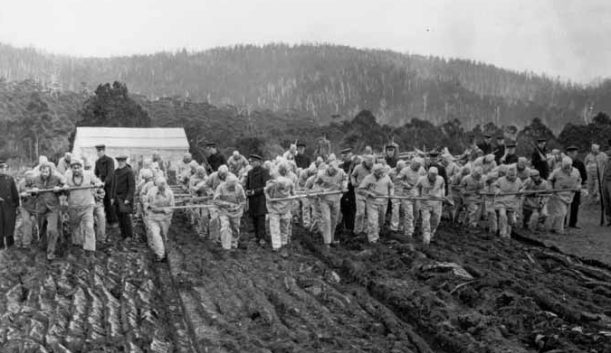
wikimedia commons
Source Pinterest—Van Diemen’s Land Steam Co.

Ben worked a year and nine months probation in the work gang before being assigned to two different farmers over the course of five years without pay or the right to marry or own land.

After seven years, convicts were permitted to marry even though they might have spouses living in England. The Government encouraged marriage between convicts as it was seen as a means of rehabilitation.

He was granted a Ticket of Leave which meant he could not own land, had to report to authorities regularly, worship each Sunday, and be confined to a named area.  In 1853 Ben was granted a Conditional Pardon. He was treated as a free person as long as he remained in the colony.

Transportation of convicts from England to Australia ended in 1857, a year before Ben’s term would have expired.  By then about 40 percent of the English-speaking population of Australia consisted of transported convicts.

I have not found any documentation for Ben after his pardon. Did he marry? Have a family? Think about his fatherless family in England? Did he have a long life? Short life? Did he find peace? Forgiveness?

After learning the context of the quote, its words seem to speak of mercy rather than friendship. The judge sifted the chaff from the grain and showed a breath of kindness, thus saving Ben from death. The widow and her son whose lamb Ben took, however, were not merciful. They could have given the destitute family a Christmas lamb. Instead, their actions tore a family apart.

It reminds me of another Lamb who, in mercy and love, paid with His death for the punishment we deserve. May you be encouraged by these words today.

The next day John seeth Jesus coming unto him, and saith, Behold the Lamb of God, which taketh away the sin of the world. John 1:29 KJV

For he hath made him to be sin for us, who knew no sin; that we might be made the righteousness of God in him. 2 Corinthians 5:21 KJV

But God, who is rich in mercy, for his great love wherewith he loved us, Even when we were dead in sins, hath quickened us together with Christ, (by grace ye are saved;) Ephesians 2:4-5 KJV

Let us therefore come boldly unto the throne of grace, that we may obtain mercy, and find grace to help in time of need. Hebrews 4:16 KJV